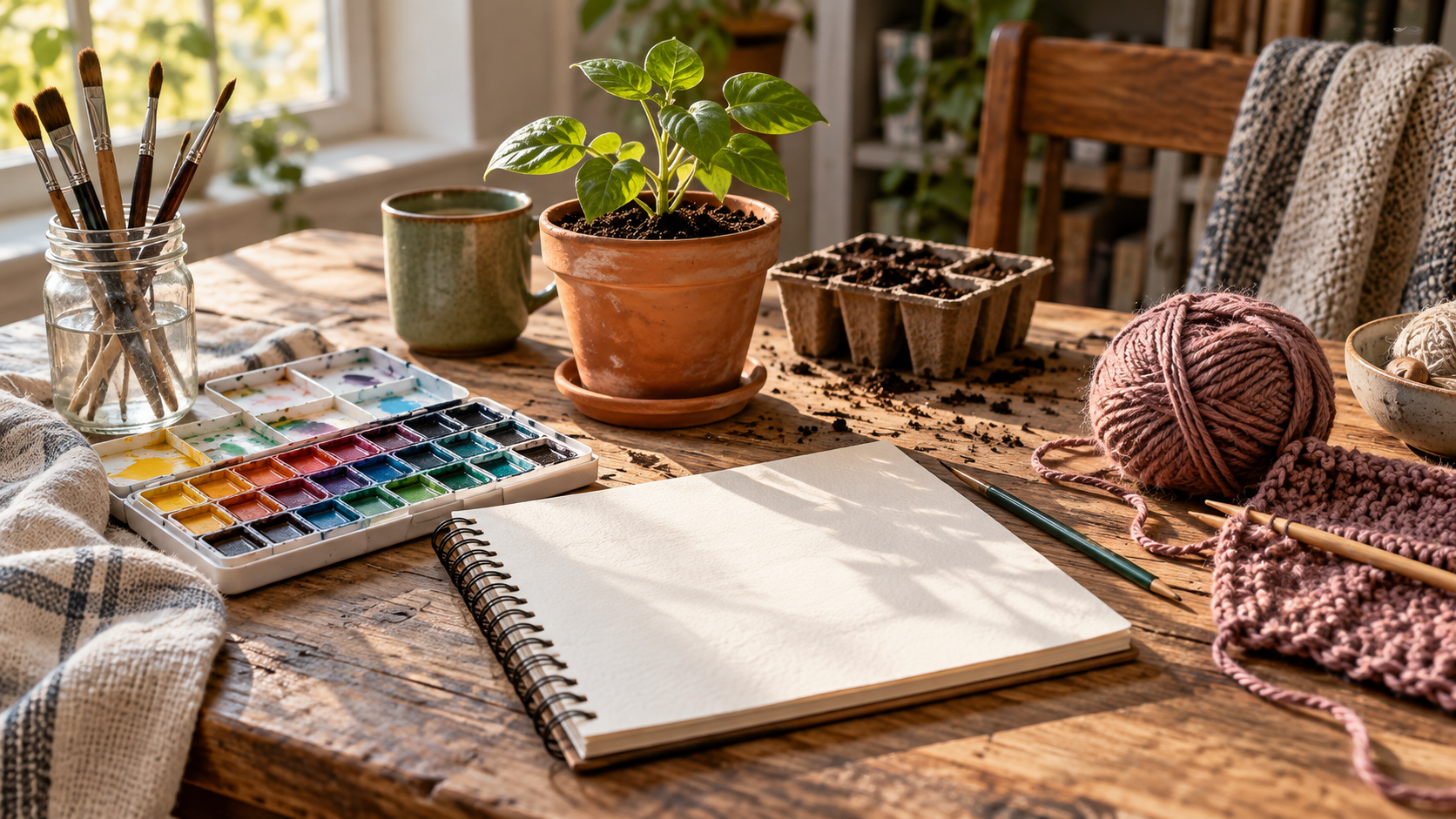
Start an at-home hobby with a small project and supplies you already have. These ten ideas let you compare interest, space and effort before buying equipment or chasing income. The original quarantine article belongs to its 2021 context; this guide does not describe current isolation rules or promise health benefits.
Choose a small first session, not an ambitious shopping list
Decide what you want from the session: making something, learning a technique or spending time on an activity you enjoy. Pick a project small enough to put away when you finish. A pencil sketch or a few lines of writing can tell you more about your interest than a cart full of new equipment.
The historical article combines creative hobbies with survey participation and possible online income. Keep those aims separate. You can enjoy a hobby without selling its result, publishing it or earning anything. Before following an old recommendation, check whether the linked service still offers the feature you want and what information it asks you to share.
Ideas 1–2: cooking a familiar meal and making a small piece of art
For cooking or baking, choose a recipe you can follow with ingredients and equipment already available. Write down what you would change next time rather than buying a special appliance after one attempt. Check the recipe's instructions and any ingredient restrictions relevant to the people who will eat it.
For drawing or painting, choose one ordinary object and make a short study of its shape or colour. Paper and a pencil are enough for that experiment. If you prefer digital art, verify a tool's actual controls, saving process and terms before relying on it for a long project. A historical link to an art tool is not proof that every current feature is free or available.
Ideas 3–4: private writing and a short practice video
Write a scene, a letter you do not have to send, or a short account of an object in your home. Save the draft and revisit it later. You do not need a public blog or a paid writing program to find out whether the process suits you. Keep other people's private details out of material you might eventually publish.
For video, practise explaining a simple process in your own words and review whether the sound and framing make it understandable. YouTube's current Partner Program guidance includes eligibility conditions and a review process. Uploading a clip does not automatically create ad income. Treat making a watchable original video as the first project, with monetization a separate later decision.
Ideas 5–6: caring for a plant and learning a basic knitting sample
For gardening, begin with a plant appropriate to the space you have and consult care instructions for that particular plant. Record what you do instead of buying a whole collection immediately. Check the space, lighting and suitability for your household before choosing seeds, soil or a new container.
For knitting, try a small practice sample with suitable yarn and needles and follow clear beginner instructions. Look for progress in the technique rather than planning a business before you know whether you enjoy it. Both activities leave a physical result, so make sure you have somewhere to store the materials and unfinished work.
Ideas 7–8: dance practice and a gentle movement session
If dance appeals to you, choose an introductory lesson suitable for your experience and the space available. Clear enough room for the activity and avoid copying a difficult routine solely because it looks impressive online. A short, manageable lesson is a reasonable way to test whether you want to continue.
Yoga or another movement activity was also part of the original hobby list. Use instruction appropriate to your circumstances and stop if an activity does not suit you. This guide does not prescribe an exercise routine or claim that a hobby treats a condition. You can choose a seated creative project instead when that better matches your available energy and space.
Ideas 9–10: a bounded game session or honest survey participation
Choose a game you already have access to and set a time and spending limit before starting. Check purchase prompts, subscriptions and online interactions rather than assuming a game advertised as free has no cost. Enjoyment is a sufficient purpose; it does not need to become a reward scheme or a competitive goal.
If sharing opinions interests you, review an eligible survey panel and the information it requests before participating. Study availability, approval and rewards are conditional. Keep that activity separate from guaranteed income and from the idea that every spare minute must be monetized. After trying one or two hobbies, continue the one you actually look forward to repeating.
Sources and further reading
- SurveyPolice: historical hobby themes and quarantine context, published January 2021
- YouTube: current Partner Program eligibility and application review, read 26 October 2026
Provider terms and availability can change. This guide does not report a personal payout test.
Join the conversation
No reader comments have been published on this article yet. Log in to check community access.