Match a transportation reward to the specific station, trip or repair purchase before exchanging points. Fuel cards, ride credits, parts-store cards and prepaid cards have different acceptance rules. A card's face value does not establish where it works, when it will arrive or how much of an urgent expense it will cover.
Start with the expense and when it must be paid
Identify whether you need fuel, a ride, a replacement part or a shop's labor, then record the merchant and deadline. A points balance awaiting approval cannot fund a payment due today. Keep any expected reward outside money needed for an essential journey or repair until it has actually arrived and its use has been confirmed.
Compare the full price with the reward you can use. For a hypothetical eighty-dollar transaction, a compatible fifteen-dollar card leaves sixty-five dollars to cover through an accepted arrangement. That calculation assumes acceptance and does not establish that a merchant supports split payment. Resolve those details before choosing the card, especially if it represents most of your accumulated points.
Check fuel-card format before heading to the pump
The historical guide's fuel leads include Swagbucks, Branded Surveys, PrizeRebel, Tellwut and MyPoints. It links them with several station brands, but this review has not opened today's member catalogs. Check the exact issuer, country, card format and participating station rather than assuming a fuel-brand logo means every location and checkout method works.
Shell's current US page distinguishes physical cards from eGift Cards. Its eGift instructions require adding the card to the Shell App and using a station that accepts mobile payments. That differs from treating every electronic fuel voucher as a barcode you can simply print and hand over. Follow the instructions for the issued product; the US example does not establish the rules for Shell cards elsewhere.
Match ride credit to the trip's country and product
The reference's ride-reward leads include Branded Surveys, PrizeRebel, MySoapBox, LEO and InstaGC. Treat those names as research starting points, not current stock or bonus promises. A general reward link can also lead to a country-specific catalog, so inspect the actual issued ride credit rather than relying on the platform's broad list of brands.
Uber's rider help, already checked for the separate Uber guide, limits gift-card use to the country of purchase. Check the country and the trip or service you intend to book before adding credit. An old article's menu labels or expiry description are not a live account test. Mevumo has not redeemed ride credit or booked a journey for this comparison.
Separate parts purchases from a repair shop's bill
For repair-related rewards, the older article mentions AutoZone, Advance Auto Parts and Jiffy Lube through some of the same survey providers. A parts-store card and a service-shop card are different products. Ask the business taking your payment whether the exact card applies to the part, labor, tax and other items on your proposed invoice.
Do not infer that credit for a retailer's merchandise will cover an independent mechanic's work. Nor should a reward determine which part or repair is appropriate for a vehicle. Choose the needed service on its own merits, then see whether a confirmed card can offset the expense. This guide has not verified current repair-card catalogs, merchant acceptance or a particular service transaction.
Compare prepaid flexibility with the actual terms
A prepaid payment card can seem more flexible than a merchant-specific reward, but do not call it universally accepted. Check the issuer's permitted uses, fees, expiry and any merchant authorization requirements for the transaction you intend. Ask how to handle a balance below the invoice total before attempting payment.
Compare current point prices rather than assuming a retailer card always costs fewer points than cash or a prepaid card. An offer requiring spending can erase the apparent saving. Include any new purchase, subscription and active time in the comparison, and keep pending rewards separate. A larger face value is not a better result when its acceptance is uncertain.
Keep fulfillment records and make one bounded choice
Save the reward description, denomination, delivery period and a masked request reference. Track task approval, card delivery and merchant use separately. Contact the reward provider about a missing card and the issuer or merchant about an issued card's acceptance. Do not request several more cards to investigate one unresolved transaction.
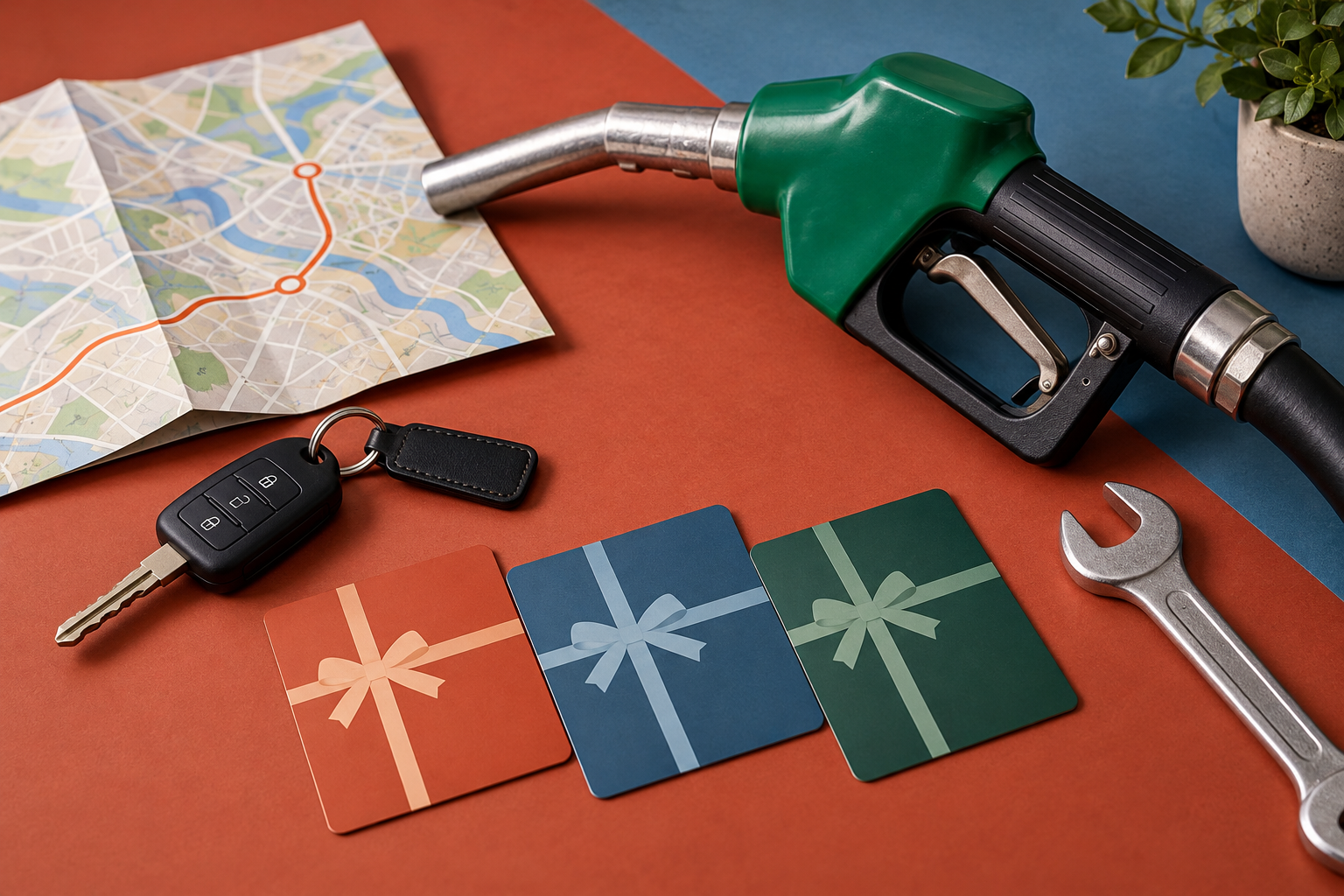
If the exact product or payment route cannot be confirmed, compare another reward rather than accumulating more points around an assumption. This is public-source research, with no station payment, ride or repair test. The original keys-and-tools cover illustrates different transportation expenses; it is not a real card, merchant quotation or proof of savings.
Sources and further reading
- SurveyPolice: historical transportation reward categories and provider leads, November 2022
- Shell USA: current physical/eGift and mobile-payment conditions
- Uber Help: country and redemption rules, previously read 26 October 2026 and reused
Provider terms and availability can change. This guide does not report a personal payout test.
Join the conversation
No reader comments have been published on this article yet. Log in to check community access.